
Buy AED machines, hospital defibrillators, AED trainers and replacement accessories in India. Compare models for your workplace, community or clinical setting, with current prices and guidance on child-use options, package contents and ongoing maintenance.


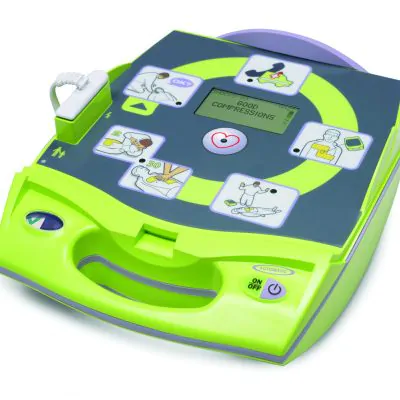
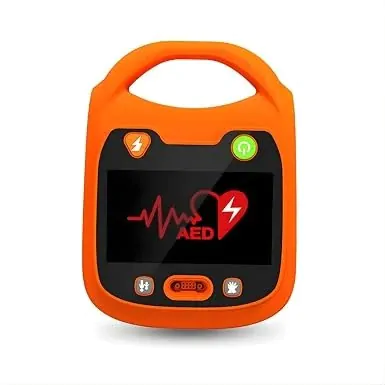
AEDs and defibrillators: choose the right emergency-response equipment
An automated external defibrillator (AED) analyses heart rhythm and guides a responder through defibrillation when a shock is indicated. Early defibrillation and CPR are important parts of responding to sudden cardiac arrest. An AED is one part of an emergency plan; access, trained responders and equipment readiness also matter. See the American Heart Association's cardiac-arrest guidance.
Our range includes complete AED machines, hospital defibrillators, training devices and replacement accessories. These serve different purposes. Start with the intended setting and the people who will operate the device, then compare the exact model and supplied package.
Current AED and defibrillator prices in India
The ranges below use current prices for in-stock, purchasable products in each group. Pads, batteries and cabinets are excluded from machine prices; AED trainers are shown separately.
In-stock prices including applicable tax. Training devices cannot deliver a treatment shock.
Check the product page for the selected configuration, package contents, delivery and final checkout total. Optional child-use accessories, spare consumables or monitoring modules can change the overall cost.
Which type of defibrillator do you need?
AED machines for an emergency-response programme
Offices, schools, hotels, gyms and community facilities can consider an AED as part of their cardiac-emergency plan. Compare voice prompts, readiness indicators, pad arrangements and access to replacement consumables. Decide where the unit will be placed and who will check it. Follow the chosen manufacturer's intended-user and training instructions.
Manual defibrillators for clinical teams
Hospital defibrillators are a different purchase from a public-access AED. Clinical teams should specify the required manual controls, monitoring, synchronised cardioversion and any optional functions before choosing a configuration. Do not assume that every listed monitoring or pacing function is included in the base machine.
AED trainers for practice
Training units simulate AED operation for demonstrations and practice. They are not treatment devices and cannot replace a functioning AED in an emergency. Compare the RespBuy AED Trainer-120C and Hygeia Mini AED Trainer for your training requirements, separately from the clinical equipment budget.
Compare selected AED and hospital defibrillator models
This comparison highlights practical purchasing differences. It does not rank a hospital defibrillator against an AED as a universal upgrade. Select the device type first, then check the model's instructions and the exact package offered.
| Model | Device type | Child-use / configuration | Buying consideration | Current price |
|---|---|---|---|---|
| Philips HeartStart HS1 | Voice-guided AED | Optional Infant/Child SMART Pads cartridge. | Confirm the supplied pad cartridge and any child-use accessory. | ₹90,470.00 |
| Philips HeartStart FRx | Voice-guided AED | SMART Pads II used with an optional Infant/Child Key for child mode. | Check whether the child key is included in your package. | ₹95,000.00 |
| Nihon Kohden AED-3100 | Voice-guided AED | Adult/child mode switch using the same pads. | Compare mode selection and pad arrangements with your responder requirements. | ₹119,000.00 |
| BPL Relife 900 | Clinical manual defibrillator | Confirm the required clinical configuration. | AED mode and additional monitoring/pacing options depend on configuration; do not assume inclusion. | ₹199,000.00 |
How to choose an AED for your organisation
1. Match the device to the setting and responders
Document who is expected to respond, where the equipment will be kept and how emergency services will be contacted. A workplace purchasing an AED and a hospital replacing a clinical defibrillator have different requirements. For outdoor or demanding locations, check the manufacturer's stated operating conditions and protection rating for the exact model.
2. Check adult and child-use arrangements
Child-use provision differs between models. Some use a separate pad cartridge or key; others use a mode switch. Ask whether the necessary accessory is included or must be ordered separately. Follow the manufacturer's age, weight and pad-placement instructions rather than assuming that all adult pads work in the same way.
3. Compare the complete package
Request a clear list of the supplied pads, battery, carry case and any other accessories. Check warranty terms, installation or demonstration arrangements and replacement-part availability for the chosen model. When comparing quotes, make sure both cover the same device configuration and consumables.
4. Plan for maintenance and ongoing costs
Assign someone to check readiness indicators and record pad and battery expiry dates according to the manufacturer's instructions. Budget for replacements and post-use replenishment. Store the device where responders can find and access it promptly. A cabinet is an accessory, not a substitute for regular checks or an emergency plan.
5. Include training and a response plan
Arrange appropriate CPR/AED training and refresher practice for designated responders. An AED's prompts support its use, but purchasing the machine alone does not establish a complete response programme. The American Heart Association's AED programme guide explains considerations such as placement, training and programme ownership.
Replacement pads, batteries and AED accessories
Choose replacements by the exact defibrillator model and manufacturer part number. Similar-looking pads and batteries are not automatically interchangeable. Our category also includes pads, batteries and storage accessories; these lower-priced items should not be confused with complete AED machines.
Before ordering a replacement, share the device model and existing part number with our support team. Check whether a pad is intended for clinical use or training, and whether it is for the required patient group. For a new installation, confirm any child-use accessory and cabinet requirements alongside the machine.
Frequently asked questions
What is the difference between an AED and a manual defibrillator?
An AED analyses heart rhythm and provides prompts for the responder. A manual defibrillator gives trained clinical staff controls for treatment decisions. Choose according to the setting, intended operators and required functions.
What is the current price of an AED machine?
See the live complete-AED price range above and the individual product pages. Hospital defibrillators and AED trainers have separate ranges. Pads, batteries and cabinets are excluded from the machine range.
Can an AED trainer be used in an emergency?
No. An AED trainer is for instruction and practice and cannot deliver a treatment shock. Keep training equipment clearly distinguished from clinical equipment.
Can the same AED be used for adults and children?
This depends on the model and its approved child-use setup. Some require a separate child pad cartridge or key; others have a mode switch. Check the manufacturer instructions and whether the necessary accessory is supplied.
Are pads, batteries and a carry case included?
Package contents vary by model and offer. Check the individual listing and ask our support team to confirm the supplied pads, battery, case and any child-use accessories before ordering.
Do responders need CPR and AED training?
Plan appropriate CPR/AED training and follow the selected manufacturer’s intended-user guidance. Voice prompts assist operation, but a response plan, accessible equipment and readiness checks are also important.
How should we choose replacement pads or batteries?
Match the exact device model and manufacturer part number. Check clinical versus training use, patient group and expiry information. Share the existing part number with our support team if compatibility is unclear.
How often does an AED need maintenance?
Follow the manufacturer’s inspection and replacement schedule. Assign responsibility for readiness checks, track pad and battery expiry dates, and replenish used or expired consumables. Intervals differ by model.
Need help comparing an AED package?
Share your intended location, responder training level, adult or child-use requirements and preferred model with our support team. We can help you compare the listed equipment and clarify package contents before you order. For hospital purchases, include the required clinical functions so the configuration can be checked.
Manufacturer references: Philips HeartStart HS1, Philips HeartStart FRx, Nihon Kohden AED-3100 datasheet and BPL Relife 900. Specifications and optional accessories should be checked against the exact supplied configuration.