




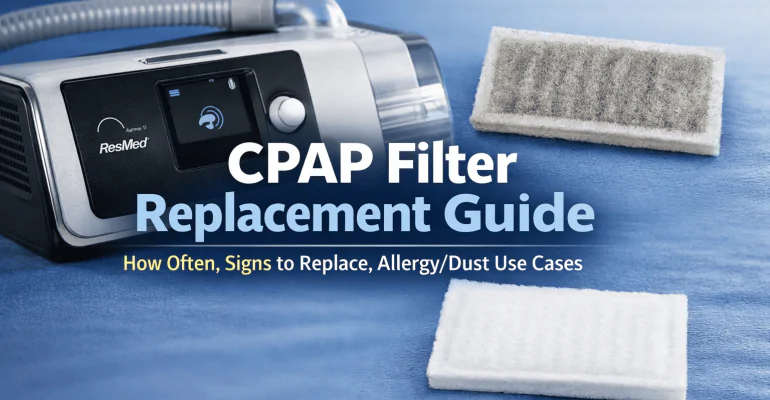
CPAP Filter Replacement Guide: How Often, Signs to Replace, Allergy/Dust Use Cases
April 6, 2026 2026-04-06 17:14CPAP Filter Replacement Guide: How Often, Signs to Replace, Allergy/Dust Use Cases
CPAP Filter Replacement Guide: How Often, Signs to Replace, Allergy/Dust Use Cases
If you use CPAP every night, your filter does more work than most people realize. It helps trap dust, pollen, pet hair, and other airborne particles before they enter your machine and recomfort, and machine performance. A dirty one can do the opposite.
How often replace CPAP filter?
The honest answer is: it depends on your machine, your filter type, and your home environment.
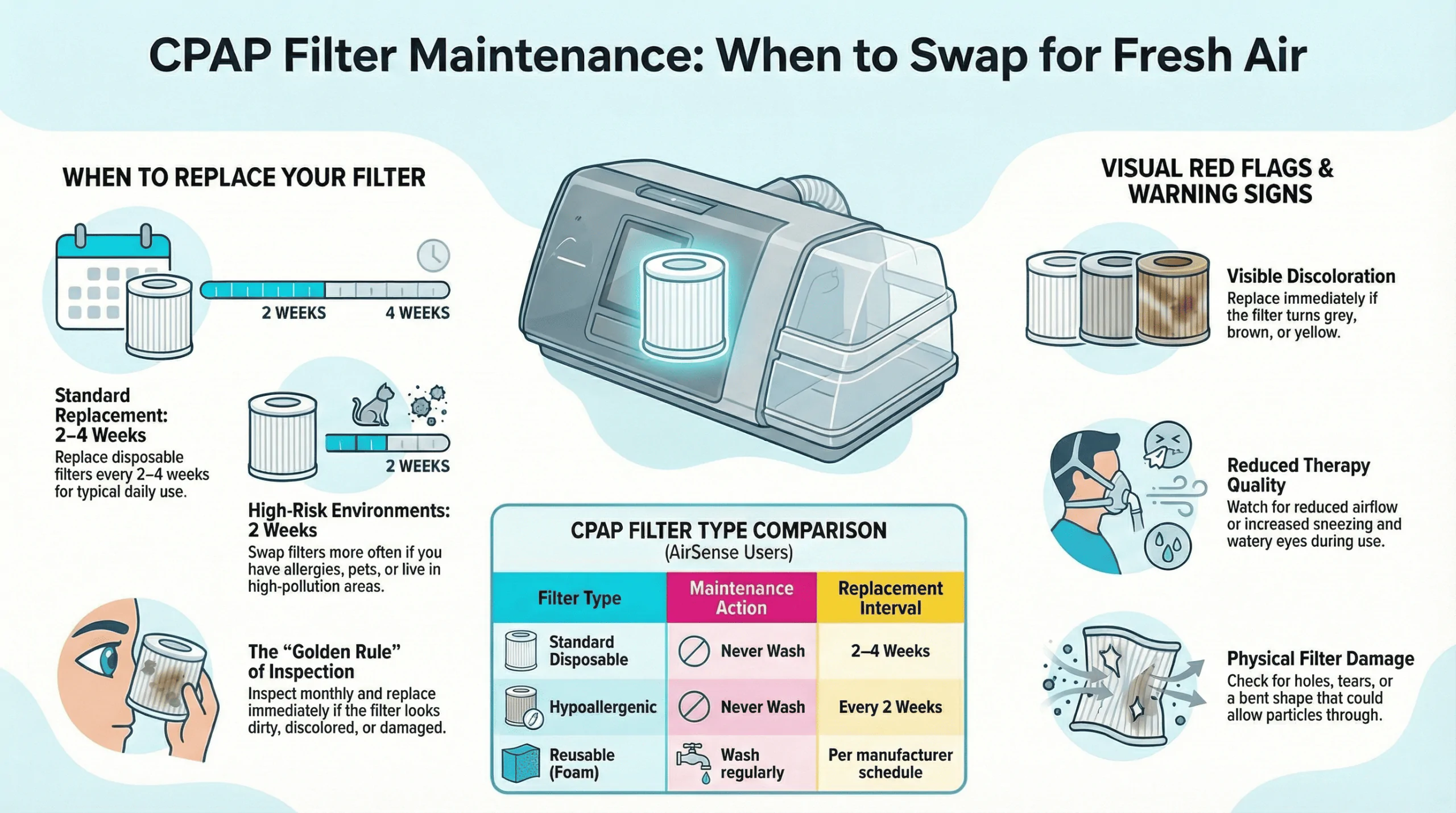
For many users, a good starting point for CPAP filter change frequency is to inspect the filter every month and replace it sooner if it looks dirty, discolored, blocked, or damaged. ResMed’s general replacement guidance lists CPAP machine filters at about every month, while ResMed India says AirSense 11 filters should be checked regularly and replaced every two months or as needed. RespBuy’s AirSense 11 disposable filter listings are even more practical for Indian use conditions: standard disposable filters are recommended every 2–4 weeks, while hypoallergenic filters may need replacement every 2 weeks.
So if you are wondering how often replace CPAP filter, use this simple rule:
- Clean home, low dust: inspect monthly, replace as needed
- Typical daily use: replace disposable filters every 2–4 weeks
- Allergies, pets, smoke, city dust, or construction nearby: replace more often, sometimes every 2 weeks
- Visible dirt, holes, or blockage: replace immediately
Signs your CPAP filter needs replacement
Do not wait only for a calendar reminder. Your filter often tells you when it is time.
Replace your CPAP filter if you notice:
- grey, brown, or yellow discoloration
- visible dust buildup
- reduced airflow or therapy feeling less fresh
- more sneezing, runny nose, or watery eyes during therapy
- holes, tears, or a bent/damaged filter
- recent exposure to smoke, renovation dust, or heavy pollution
In short, if the filter looks dirty, it is already less effective. Waiting too long can affect both comfort and machine cleanliness.
AirSense filter replacement: what users should know
When it comes to AirSense filter replacement, the most important point is that AirSense disposable filters are not washable. The AirSense 10 user guide says the air filter is not washable or reusable, and it should be replaced more often if dirt or dust causes blockage. RespBuy’s AirSense 11-compatible filters are also listed as disposable, single-use filters.
That means if you use a ResMed AirSense device, your routine should be simple: remove the old filter, insert a fresh dry filter, and never try to wash and reuse a disposable one. For many Indian households, especially in dusty cities or during allergy season, checking weekly and replacing every 2–4 weeks is a practical habit.
Disposable vs reusable CPAP filters
A common question is disposable vs reusable CPAP filters.
Disposable filters are designed for single use. They are convenient, hygienic, and usually better for fine dust and everyday replacement routines. Many AirSense filters fall in this category. Once dirty, they should be replaced, not washed.
Reusable filters are more common on some other CPAP models, usually as foam-style filters. These can often be washed and reused for a period of time before eventual replacement. But reusable does not mean permanent. They still wear out and need routine care and replacement on schedule.
If you have an AirSense machine, always check whether your filter is specifically listed as disposable. For most AirSense users, the safer assumption is that regular replacement matters more than trying to extend filter life.
Best use cases for allergy and dust-prone homes
Filter replacement becomes even more important if:
- you have allergies or asthma
- you live with pets
- your room gathers dust quickly
- you live near traffic, smoke, or construction
- you use CPAP in a high-pollution city environment
In these cases, a hypoallergenic disposable filter can be a smart option. RespBuy’s AirSense 11 hypoallergenic filters are positioned for users with allergies, asthma, sensitive lungs, and high-pollution environments, with a recommended replacement interval of about every 2 weeks.
Final word
The best CPAP filter change frequency is not just what the manual says. It is what keeps your therapy clean, comfortable, and consistent in your real environment. For most people, that means checking the filter often and replacing it as soon as it looks dirty. If you use AirSense and live in a dusty or allergy-prone setting, replacing disposable filters every 2–4 weeks is a sensible habit, and even sooner for hypoallergenic use cases.