
Popular posts

Sleep Apnea Treatment Guide: Symptoms, Causes and the Best Therapy Options
March 26, 2026 2026-03-27 18:39Sleep Apnea Treatment Guide: Symptoms, Causes and the Best Therapy Options
Sleep Apnea Treatment Guide: Symptoms, Causes and the Best Therapy Options
📋 In This Guide
- What Is Sleep Apnea ?
- Types of Sleep Apnea
- Warning Signs & Symptoms
- Causes & Risk Factors
- Why Leaving It Untreated Is Dangerous
- How Is Sleep Apnea Diagnosed?
- Best Treatment Options
- Lifestyle Changes That Help
- Frequently Asked Questions
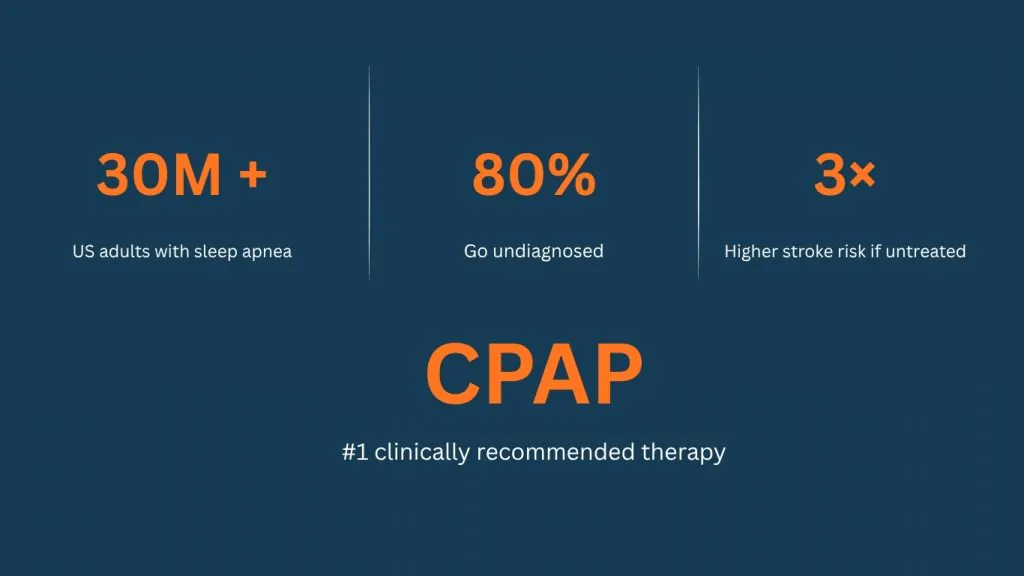
You wake up exhausted after a full night’s sleep. Your partner nudges you about your loud snoring. You reach for your third cup of coffee before noon. Sound familiar? You may be one of the estimated 30 million adults living with sleep apnea — and most of them don’t even know it. This guide breaks down everything you need to understand: what sleep apnea actually is, why it happens, how to spot it, and most importantly — the best ways to treat it.
What Is Sleep Apnea?
Sleep apnea is a serious sleep disorder in which your breathing repeatedly stops and starts during sleep. These pauses — called apneas — can last from a few seconds to over a minute and may occur dozens of times per hour. Each time your breathing stops, your brain briefly jolts you awake to reopen the airway. Most people don’t remember these awakenings, but the damage to sleep quality is cumulative and significant.
Unlike ordinary snoring, sleep apnea isn’t just a nuisance — it’s a medical condition that can have serious consequences for your cardiovascular health, mental well-being, and daily functioning.
Types of Sleep Apnea
1. Obstructive Sleep Apnea (OSA) — Most Common
OSA occurs when the muscles at the back of the throat relax too much during sleep, causing the airway to narrow or close completely. Your chest and abdomen keep trying to breathe, but air can’t get through. This is the most prevalent form and accounts for the majority of sleep apnea diagnoses.
2. Central Sleep Apnea (CSA)
In CSA, the problem isn’t physical blockage — it’s a communication failure. The brain simply doesn’t send the right signals to the muscles that control breathing. This type is less common and is often associated with heart failure, stroke, or opioid use.
3. Complex (Mixed) Sleep Apnea
Also called treatment-emergent central sleep apnea, this is a combination of both obstructive and central types. It is often identified after OSA treatment begins.
Warning Signs & Symptoms of Sleep Apnea
The tricky thing about sleep apnea is that many of its most telling symptoms happen while you’re unconscious. Here’s what to watch for — both at night and during the day:
Often the first sign noticed by a bed partner. Not all snorers have apnea, but persistent loud snoring warrants a check-up.
Sudden awakenings with a gasp, choke, or feeling of being smothered are classic signs of apnea events.
Feeling unrefreshed after a full night’s sleep and excessive fatigue during the day, even after enough hours in bed.
💧
Waking up with a dry mouth or sore throat often indicates breathing through the mouth during sleep.
Difficulty concentrating, forgetfulness, and irritability are common daytime effects of disrupted sleep.
Low oxygen levels overnight can cause blood vessels to dilate, leading to frequent morning headaches.
Important: Many people with sleep apnea live with it for years without a diagnosis. If you experience three or more of these symptoms regularly, speak with your doctor and ask about a sleep study.
Causes & Risk Factors
Sleep apnea doesn’t have a single cause. It’s typically the result of a combination of anatomical, physiological, and lifestyle factors. Understanding your risk factors is the first step toward getting the right help.
Alcohol consumption and sedative use relax throat muscles, increasing the frequency and duration of apnea events. Smoking causes inflammation and fluid retention in the airway. Sleeping on your back also increases the likelihood of airway obstruction due to gravitational effects on soft tissue.
Excess weight — particularly fat deposits around the neck, tongue, and upper airway — is the leading risk factor for OSA. Structural features like a narrow airway, enlarged tonsils, a recessed jaw, or a thick neck can all make someone more prone to airway collapse during sleep.
The risk of sleep apnea increases with age. Men are more likely to develop OSA, although the risk in women rises significantly after menopause. Hormonal and anatomical differences play a key role in this disparity.
Conditions such as hypothyroidism, type 2 diabetes, heart failure, and polycystic ovary syndrome (PCOS) are associated with higher sleep apnea rates. Nasal congestion from allergies or a deviated septum can also contribute.
Why Leaving Sleep Apnea Untreated Is Dangerous
Sleep apnea is far more than a sleep inconvenience. Every time breathing pauses, oxygen levels in your blood drop, placing stress on your heart and brain. Over time, this creates a cascade of serious health risks:
- High blood pressure (hypertension) — the repeated drops in oxygen cause your blood pressure to spike, often permanently.
- Heart disease & irregular heartbeat — sleep apnea is closely linked to atrial fibrillation, heart failure, and coronary artery disease.
- Stroke — people with untreated sleep apnea face a significantly elevated risk of stroke.
- Type 2 diabetes — poor sleep and oxygen deprivation worsen insulin resistance.
- Depression & anxiety — chronic sleep deprivation has a profound effect on mental health.
- Increased accident risk — driving or operating machinery while drowsy is a very real safety hazard.
💡Key takeaway: Treating sleep apnea isn’t just about sleeping better — it’s about protecting your heart, brain, and long-term quality of life.
How Is Sleep Apnea Diagnosed?
The only way to accurately diagnose sleep apnea is through a sleep study. There are two main options:
Polysomnography (In-Lab Sleep Study)
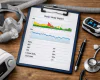
Considered the gold standard, polysomnography is conducted overnight in a sleep clinic. It monitors your brain activity, eye movements, heart rate, blood oxygen levels, respiratory effort, and muscle activity simultaneously. This gives clinicians a comprehensive picture of what happens to your body during sleep.
Home Sleep Apnea Test (HSAT)
A simpler, more convenient option for many patients. A portable device is taken home to wear during sleep and then returned for results analysis. Home tests are generally appropriate for moderate-to-severe OSA and are not recommended for complex or unclear cases.
After testing, your doctor will calculate your Apnea-Hypopnea Index (AHI) — the number of apnea events per hour. An AHI under 5 is normal; 5–14 is mild; 15–29 is moderate; and 30 or more is severe sleep apnea.
Best Sleep Apnea Treatment Options
There is no universal cure for sleep apnea, but the right treatment can dramatically reduce — and in some cases eliminate — apnea events. Treatment depends on the type and severity of sleep apnea, as well as your personal preferences and health profile.
| Treatment | Best For | Effectiveness |
|---|---|---|
| CPAP Therapy | Moderate–Severe OSA | Highest |
| BiPAP / APAP Therapy | High-pressure needs; CPAP intolerance | Very High |
| Oral Appliance (MAD) | Mild–Moderate OSA; CPAP intolerant | Moderate–High |
| Positional Therapy | Positional (back-sleeper) OSA | Moderate |
| Hypoglossal Nerve Stimulation | Moderate–Severe OSA; CPAP intolerant | Moderate–High |
| Surgery | Structural airway issues | Variable |
| Weight Loss / Lifestyle | Mild OSA; obesity-related | Moderate |
CPAP Therapy — The Gold Standard
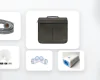
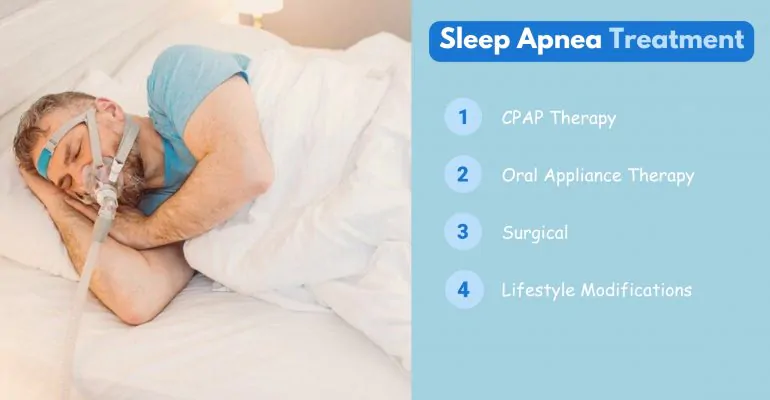
Continuous Positive Airway Pressure (CPAP) therapy is the most effective and widely recommended treatment for obstructive sleep apnea. A CPAP machine delivers a steady stream of pressurized air through a mask you wear while sleeping, keeping your airway open and preventing the breathing pauses that define sleep apnea.
Modern CPAP machines are quieter, smarter, and more comfortable than ever before — many include auto-adjusting pressure, humidifiers, and travel-friendly compact designs. If you’ve struggled with CPAP in the past, newer technology and better-fitting masks can make all the difference.
Source : resmed
BiPAP & APAP — Flexible Alternatives
Bilevel Positive Airway Pressure (BiPAP) delivers different pressure levels on inhalation and exhalation, making it easier to breathe out against the machine. It’s particularly useful for patients who require higher pressure settings or who have central sleep apnea. Auto-adjusting PAP (APAP) machines automatically vary pressure throughout the night based on your real-time breathing patterns, offering a personalized therapy experience.
Oral Appliance Therapy (MAD)
Mandibular Advancement Devices (MADs) are custom-fitted mouthpieces, created by a dental sleep medicine specialist, that gently reposition your lower jaw forward during sleep. This helps keep the tongue from collapsing into the airway. They are a solid first-line option for mild-to-moderate OSA and a viable alternative for those who cannot tolerate CPAP.
Source : sleepapnea
Hypoglossal Nerve Stimulation (Inspire Therapy)
A newer, innovative option for people with moderate-to-severe OSA who cannot use CPAP. A small implantable device monitors your breathing and delivers mild electrical stimulation to the hypoglossal nerve — the nerve that controls tongue movement — keeping the airway open. It is controlled by a handheld remote and has shown strong results in clinical trials.
Surgery
Surgical options are generally considered when other treatments haven’t worked or when there are clear structural abnormalities. Procedures range from removal of enlarged tonsils and adenoids to more complex jaw advancement surgery (maxillomandibular advancement), which can cure OSA in certain candidates.
Source : sleepfoundation
Lifestyle Changes That Support Sleep Apnea Treatment
While lifestyle changes alone may not resolve moderate or severe sleep apnea, they are an important complement to medical treatment — and may be enough to manage mild cases:
- Lose excess weight: Even a 10% reduction in body weight can meaningfully reduce apnea events.
- Sleep on your side: Back sleeping worsens airway obstruction for most people with OSA. Positional pillows or special devices can help.
- Limit alcohol & sedatives: These relax throat muscles, making airway collapse more likely during sleep.
- Quit smoking: Smoking inflames and irritates the upper airway, worsening obstruction.
- Treat nasal congestion: Allergies and nasal blockages can significantly worsen breathing during sleep.
- Maintain a consistent sleep schedule: Good sleep hygiene supports better overall sleep quality and complements therapy.
Frequently Asked Questions
In some cases — particularly when related to weight gain or nasal congestion — sleep apnea can improve significantly with lifestyle changes. However, structural causes generally require medical treatment. It’s always best to get a proper diagnosis rather than waiting and hoping it resolves.
No. While CPAP is the most effective first-line treatment for moderate-to-severe OSA, there are several alternatives — including oral appliances, positional therapy, nerve stimulation devices, and surgery. Your sleep specialist will help you find the best fit for your situation.
CPAP masks come in several styles: nasal masks, full-face masks (covering nose and mouth), and nasal pillow masks. The right choice depends on whether you breathe through your nose or mouth, your sleeping position, and comfort preferences. Trying different options and working with your provider is key to long-term CPAP adherence.
Yes. Pediatric sleep apnea is more common than many parents realize and is often caused by enlarged tonsils or adenoids. Symptoms in children may include restless sleep, bedwetting, behavioral issues, and poor school performance. Tonsillectomy is a common and often curative treatment in children.
Ready to Sleep Better? RespBuy Is Here to Help.
From CPAP machines and masks to accessories and expert guidance — we stock everything you need to start your sleep therapy journey with confidence.