




Acupuncture Prices: What Usually Affects the Cost for Sleep & Respiratory Patients
March 11, 2026 2026-03-11 19:07Acupuncture Prices: What Usually Affects the Cost for Sleep & Respiratory Patients

Acupuncture Prices: What Usually Affects the Cost for Sleep & Respiratory Patients
If you’re dealing with sleep apnea or a long-term respiratory condition, you’ve probably already looked into CPAP therapy, BiPAP machines, or oxygen support. But a growing number of people are adding acupuncture to their care plan, hoping it might reduce snoring, improve sleep, or help them breathe easier at night.
Before you book, it helps to know what you’re likely to pay and why costs vary so much from one clinic to the next.
It Starts With That First Visit
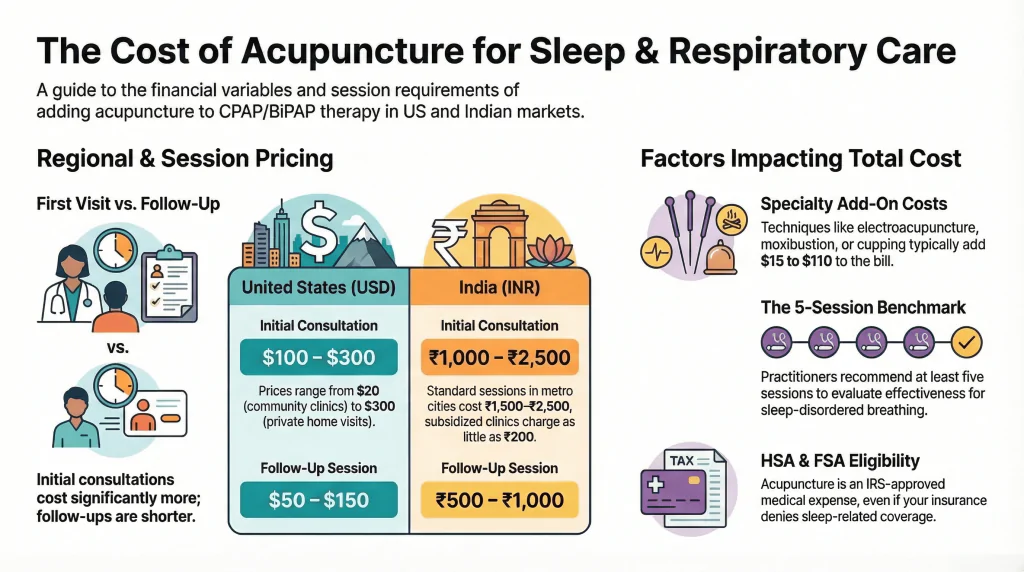
Your first acupuncture consultation will almost always cost more than a follow-up.
The practitioner needs to review your health history, sleep patterns, breathing issues, medications, and what you’re hoping to get out of treatment.
Here are the standard acupuncture prices:
In the US, first visits fall between $100 and $300 at a private practice, while follow-ups drop to $50 to $150. Community clinics may charge as low as $20.
In India, an initial consultation runs around ₹1,000 to ₹2,500 depending on the city. Follow-ups usually cost ₹500 to ₹1,000. Metro cities like Delhi, Mumbai, or Bangalore tend toward the higher end.
First appointments usually run 60 to 90 minutes in both countries, while later sessions are closer to 30 to 60 minutes. Complex respiratory cases that need multiple acupoint strategies will take longer and cost more.
Practitioner Experience and Specialty Techniques
Not all acupuncturists charge the same, and credentials make a real difference.
A practitioner with decades of hands-on work or focused training in sleep-disordered breathing will charge more than someone who just got licensed.
Then there are the add-on techniques. Electroacupuncture, which studies suggest may produce the strongest improvements in breathing-related sleep measures, requires extra equipment, so clinics often add around $15 or more for it. Moxibustion adds $25 to $40, and cupping therapy can cost $40 to $110 on its own, though most clinics bundle it at a lower rate with acupuncture.
Where You Live Changes Everything
Geography is one of the biggest cost factors, and this applies in both countries.
In the US: California first sessions usually cost $100 to $200, while Texas clinics charge $60 to $120. Private one-on-one sessions average $75 to $150. Community or group acupuncture costs $20 to $60. Home visits run $180 to $300 or more.
In India: Metro cities like Delhi, Mumbai, and Bangalore charge ₹1,500 to ₹2,500 per session, while smaller cities may charge ₹800 to ₹1,200. Hospital-based acupuncture departments can charge ₹6,000 to ₹9,000 for a full course. Subsidized clinics may offer sessions for as low as ₹200 to ₹500.
How Many Sessions Will You Need?
That depends on how severe your condition is. Acute issues might call for two or three sessions per week, while chronic conditions often need weekly visits. Maintenance care may only be monthly. A standard course runs 6 to 12 sessions.
For sleep apnea patients, some clinical trials have reported benefits when acupuncture was paired with treatments like CPAP or BiPAP therapy over several weeks. Most practitioners recommend at least five sessions before deciding whether it’s working.
What About Insurance and HSA/FSA?
Here’s where it gets frustrating. Many acupuncturists don’t accept insurance, and even plans that do cover acupuncture usually cap the number of sessions or require a formal diagnosis. Medicare only covers acupuncture for chronic low back pain, not for sleep apnea or respiratory conditions.
On the bright side, acupuncture qualifies as an IRS-approved medical expense, so you can use HSA or FSA funds to pay for it even when insurance won’t. Keep your receipts and have a letter of medical necessity ready if your plan asks for one.
Many clinics also offer package deals or membership programs that lower the per-session cost. Always ask about these before signing up.
A Few Things to Keep in Mind
Acupuncture should sit alongside your existing treatment, not replace it. If you’re on CPAP therapy or using a BiPAP device, keep using it. Talk to your sleep specialist before starting acupuncture, pick a licensed practitioner with relevant experience, and get pricing in writing before you book.
Track your symptoms and share updates with your acupuncturist and your doctor. If nothing is improving after the recommended sessions, it may be time to rethink the plan.
Acupuncture can be a useful addition to your sleep and respiratory care. Just go in knowing what to expect, what it costs, and who you’re working with.