



PC Based Spirometer Comparison: Clarity SpiroTech vs RMS Helios 401
October 15, 2026 2026-10-15 16:05PC Based Spirometer Comparison: Clarity SpiroTech vs RMS Helios 401
PC Based Spirometer Comparison: Clarity SpiroTech vs RMS Helios 401
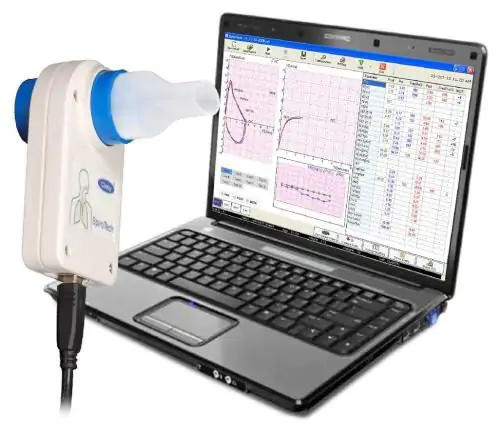
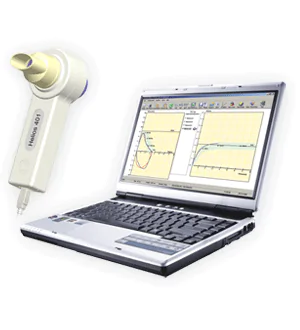
A PC based spirometer brings a breathing test onto a computer screen, combining a connected sensor with software for reviewing curves, organising results and preparing reports. For a clinic comparing Clarity SpiroTech and RMS Helios 401, the useful question is not simply “How many parameters?” It is “Which results will my team actually use, and how clearly can we review them?”
This guide compares the two sample reports available from RespBuy. It explains their shared essentials, the additional fields that distinguish them and what to check during a demonstration.
Clarity SpiroTech vs RMS Helios 401: our recommendation
Our pick for buyers who prefer this reporting format: Clarity SpiroTech. Its grouped report, explicit FEV6/FVC and FEV1/FEV6 fields, and additional MVV timing rows make it worth shortlisting when those details matter to your workflow. Ask for a current demonstration with those fields populated before ordering. Helios remains a strong alternative when FIF25/50/75 or an explicit IC row is important.
This recommendation is about report presentation and the particular fields shown. The samples do not establish superior build quality, durability or measurement accuracy. Those need current specifications, a hands-on demonstration and service evidence.
PC based spirometer parameter comparison
| Report feature | Clarity SpiroTech sample | RMS Helios 401 sample |
|---|---|---|
| Core expiratory results | FVC, FEV1, FEV1/FVC, PEFR | Same core fields |
| Timed volumes | FEV.5, FEV3, FEV6 | FEV.5, FEV3, FEV6 |
| Additional six-second ratios | FEV6/FVC and FEV1/FEV6 fields; blank in this sample | Not shown in this sample |
| Expiratory flow detail | FEF25–75, FEF75–85, FEF.2–1.2, FEF25%, FEF50%, FEF75% | Same listed fields |
| Inspiratory results | FIVC and PIFR | FIVC, PIFR, plus FIF25%, FIF50%, FIF75% |
| Slow vital capacity / breathing | SVC, ERV, IRV, VE, RF, TI, TE, VT, VT/TI, TI/Ttot | Same families, plus IC |
| MVV section | MVV, MRF, MVT, plus TI, TE and TE/TI rows | MVV, MRf and MVT |
| Before/after columns | Predicted, Pre, Pre%, Post, Post%, Imp% | Predicted, M.Pre, %Pred, M.Post, %Pred, %Imp |
| Report presentation | Grouped parameter sections and a classification graphic | Colour-coded pre/post results and doctor notes |
Compared from the supplied sample reports: SpiroTech dated 25 November 2010 and Helios dated 25 December 1999 (software Helios_v3.2.62). These demonstrate report formats, not the complete capabilities of today’s software. “Not shown” does not mean unsupported. A blank field is not a recorded result.
What the core spirometry parameters tell you
FVC represents the volume exhaled during a forced manoeuvre. FEV1 describes the volume exhaled during its first second. FEV1/FVC is a calculated ratio, while PEFR describes peak expiratory flow. Both samples include these core results, alongside further timed-volume and flow fields.
These are not all independent sensor measurements. Ratios, predicted values, percentages and lung-age outputs are calculated or reference-based results. Their interpretation depends on manoeuvre quality, reference equations and clinical context. A device should therefore be assessed as a testing workflow rather than by the length of its printout.
Where Clarity’s sample report stands out
Explicit FEV6-based ratio fields
The Clarity template labels both FEV6/FVC and FEV1/FEV6. These are not visible in the supplied Helios report. For teams interested in six-second reporting, that is a specific feature to explore in a demonstration. Both fields are blank in this example, so the sample establishes their place in the report, not successful calculation in this test.
Separate breathing and MVV sections
The parameter table is divided into blocks. Its MVV block includes TI, TE and TE/TI alongside MVV, MRF and MVT. TI and TE also appear in the earlier breathing section; counting those repeated labels as entirely new independent parameters would exaggerate the difference.
A report layout worth seeing in practice
The Clarity sample brings curves, a grouped table and a classification graphic onto one page. We prefer this grouping for buyers who want a structured overview. This is a presentation preference, not evidence that an automated classification is more clinically reliable.
Where Helios deserves credit
The Helios report explicitly includes FIF25%, FIF50% and FIF75%, as well as inspiratory capacity (IC). These rows are not visible in the supplied Clarity sample. It also provides colour-separated pre/post curves and values, along with a doctor-notes area. If these fields are part of your routine, ask both suppliers to demonstrate them in the current software.
Why the sample values are not a head-to-head accuracy test
The examples are from different people and use different prediction equations. Their dates also differ substantially. Comparing their numerical FEV1, FVC or percentage-change values would compare different tests rather than compare instrument accuracy. Likewise, an empty field cannot establish that a device lacks the underlying capability.
These legacy reports are useful for examining layout and field labels. They are not evidence of the latest software’s reference equations, quality grading, export formats or operating-system compatibility. Ask for an up-to-date sample before committing to a workflow.
What to check before buying a PC based spirometer
- Required outputs: give the supplier your actual parameter checklist and request a populated report.
- Software compatibility: confirm the exact supported Windows version, driver installation, licence and update arrangements.
- Test quality: ask how manoeuvre acceptability, repeatability and calibration verification are supported.
- Daily handling: inspect the handset, cable connection, turbine access and cleaning procedure during a demonstration.
- Consumables and service: confirm compatible mouthpieces, filters, replacement parts, warranty terms and service turnaround.
- Report workflow: try patient lookup, a repeat visit, printing and your required export format rather than assuming every integration is included.
Use current ATS/ERS spirometry guidance as a professional reference for test quality. More report rows alone do not establish compliance with a standard.
Choose the report that fits your clinic
Our pick for buyers who prefer this reporting format: Clarity SpiroTech. Its grouped report, explicit FEV6/FVC and FEV1/FEV6 fields, and additional MVV timing rows make it worth shortlisting when those details matter to your workflow. Ask for a current demonstration with those fields populated before ordering. Helios remains a strong alternative when FIF25/50/75 or an explicit IC row is important.
Explore Clarity SpiroTech · Explore RMS Helios 401
View the sample reports
Clarity SpiroTech sample report PDF · RMS Helios 401 sample report PDF
Does Clarity report every parameter that Helios reports?
No. The supplied Clarity sample includes additional FEV6-based ratio fields and MVV timing rows. The Helios sample includes FIF25%, FIF50%, FIF75% and IC, which are not shown in the supplied Clarity sample.
Does a blank result mean the device cannot report it?
No. A blank cell may reflect the performed manoeuvre, available data or report configuration. Verify required outputs using a current software demonstration.
Does a longer report prove higher accuracy?
No. Reporting breadth, measurement accuracy and clinical interpretation are different questions. Compare current manufacturer specifications and test-quality features separately.
Can these sample results be compared as a device accuracy test?
No. The reports concern different people, test dates and prediction equations. Their numeric results cannot establish which device is more accurate.
Is a PC-based spirometer a complete lung-function laboratory?
No. Spirometry reports airflow and volume-related results from breathing manoeuvres. Other investigations may be needed for a complete pulmonary assessment; interpretation belongs to qualified clinicians.