



CPAP Humidifier Settings: How to Reduce Dry Nose, Congestion & “Rainout”
February 12, 2026 2026-02-12 18:13CPAP Humidifier Settings: How to Reduce Dry Nose, Congestion & “Rainout”
CPAP Humidifier Settings: How to Reduce Dry Nose, Congestion & “Rainout”
If your CPAP therapy makes your nose dry, your sinuses stuffy, or gives you that annoying gurgling water-in-the-hose feeling (also known as CPAP rainout), the first thing to check is usually your humidifier settings. The goal is simple: add enough moisture to keep things comfortable without making the tubing wet.
(This is just general advice.) If you have chronic nasal blockage, nosebleeds, severe dryness, or asthma or COPD concerns, talk to your sleep doctor.
What the different settings on a CPAP humidifier do
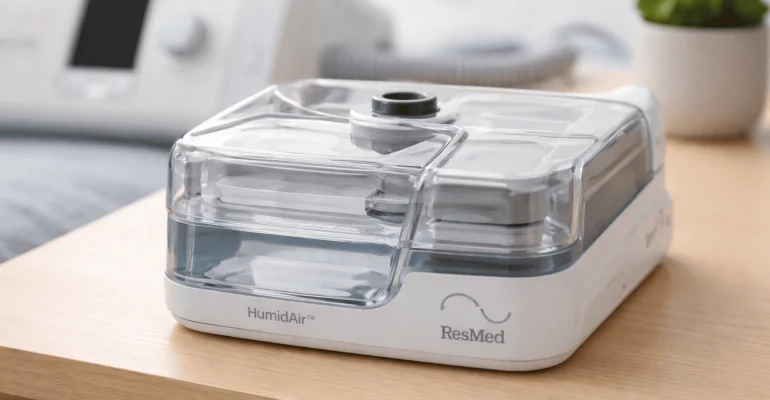
Most CPAP machines with a heated humidifier let you change the humidity level, which is usually between 1 and 8 or Low and High. Higher settings add more moisture to the air, which can help with stuffiness and irritation. If your room is cool, though, that warm, moist air can condense inside the hose and mask, which can make it rain.
The “sweet spot” method: set the humidity for three nights
Follow these steps quickly so you don’t have to keep guessing:
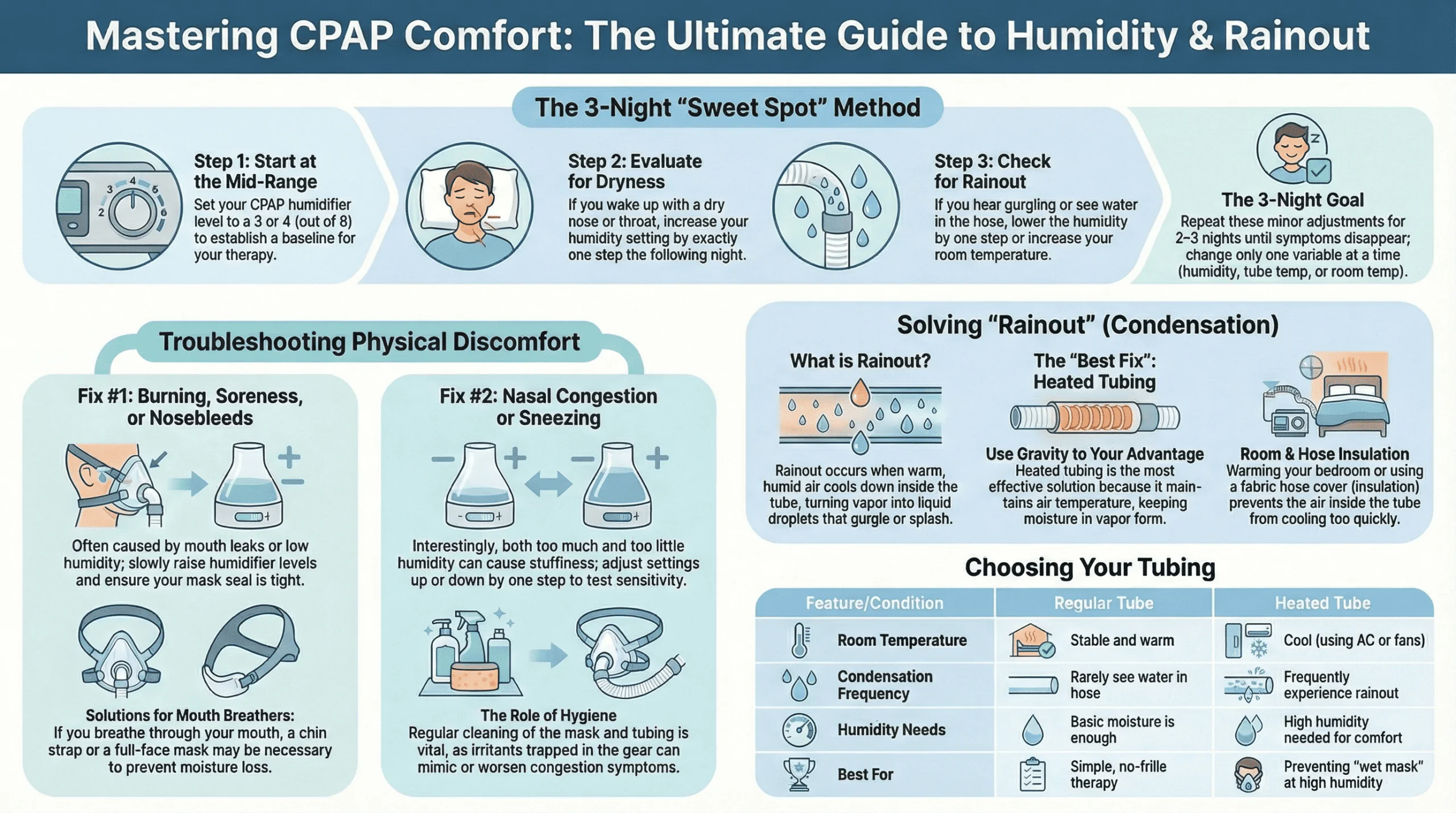
- Begin in the middle range (level 3–4).
- If your nose is dry when you wake up, CPAP symptoms go up by one step.
- If you get rainout (water droplets and gurgling), lower the humidity by one step or warm up the tube or room.
- Do this again until the symptoms go away (usually in 2–3 nights).
Tip: Change one thing at a time, like the humidity, the tube temperature, or the room temperature.
Fix #1: Use CPAP to dry your nose (burning, soreness, and nosebleeds)
Lack of humidity, mouth leaks, or irritation from airflow are common causes of dryness.
Do this:
- Raise the level of the humidifier slowly, one step at a time.
- Make sure your mask fits well (leaks can make dryness worse).
chin strap• If you breathe through your mouth, you might want to think about getting a chin strap or talking to your doctor about a full-face mask.
- Use saline spray before bed (not medicine), especially if you live in a dry area.
RespBuy also says that changing the humidity can help keep the upper airways from getting too dry without causing rainout.
Fix #2: Nasal congestion while using CPAP (blocked nose, pressure, sneezing)
People are surprised by this: too little humidity can make you feel stuffy, but too much humidity can also make you feel stuffy.
Use this list:
- If your nose is dry and blocked, raise the humidity a little bit.
- If your nose feels stuffy or swollen, lower the humidity by one step and see if it gets better.
- Clean your mask and tubing often (things that irritate your nose can make congestion worse).
- If allergies are a problem, talk to your doctor about adding or using a filter or allergy management.
If you have congestion that doesn’t go away, it could be due to something else (like a deviated septum, chronic rhinitis, or sinusitis). Don’t suffer in silence; get it checked out.
Solution #3 for CPAP rainout (condensation in the tube or mask)
Rainout is the condensation that happens when warm, humid air cools down inside the tube.
The best solutions (start with the easiest)
1. Use a heated tube (the best fix)
Heated tubing keeps the air warmer, which keeps moisture in vapor form instead of turning into droplets.
The product pages for RespBuy’s heated tubing also say that one of the main benefits is that it reduces condensation.
2. Make your bedroom a little warme
A cooler room makes condensation more likely. A small change in temperature can help.
3. One step to lower the humidity
Less moisture means less chance of condensation.
4. Run the hose below your mask
Let the moisture flow back toward the machine, not into your mask.
5. Put a cover over the hose. Insulation keeps things cooler and can cut down on condensation. The study also found that tube insulation can help keep condensation from forming.
Apria’s rainout tips follow the same order of importance as a simple “do this first” approach: change the settings, think about heated tubing, control the room temperature, and keep the hose warm and covered.
Should you choose a heated tube or a regular tube?
If you’re trying to choose between a heated tube and a regular tube, here’s a useful way to do it:
If you want a normal tube,
- Your room stays at a stable, warm temperature
- You don’t often see condensation
- You mostly want basic therapy without any extra things.
If you want a heated tube,
- You often have to deal with CPAP rainout
- Your bedroom is cool, or you use an AC or fan.
- You need more humidity to make your dry nose or throat feel better.
Heated tubes are great when you want a certain level of humidity but don’t want the mask to get too wet.
A quick guide to fixing things (quick answers)
- If your nose is dry or burning, slowly raise the humidity and look for leaks
- Nasal congestion CPAP: adjust the humidity up or down by one step, clean the gear, and think about allergies.
- Rainout: First, heat the tube, then the room, and finally lower the humidity.
- Mask is wet but nose is still dry → probably leaks or mouth breathing, not just humidity.
Tips for cleaning and water (comfort and hygiene)
- Follow the instructions for your device and use clean water (many users prefer distilled water when they can)
- If you can, empty the chamber every day and let it air dry.
- To cut down on smell and irritation, keep the tubing clean and completely dry after washing