
Popular posts



5 Reasons Your Under-Eyes Always Look Tired
May 06, 2026
CPAP Skin Marks, Rashes and Nose Bridge Pain: Causes and Practical Fixes
June 17, 2026 2026-06-17 10:09CPAP Skin Marks, Rashes and Nose Bridge Pain: Causes and Practical Fixes
CPAP Skin Marks, Rashes and Nose Bridge Pain: Causes and Practical Fixes
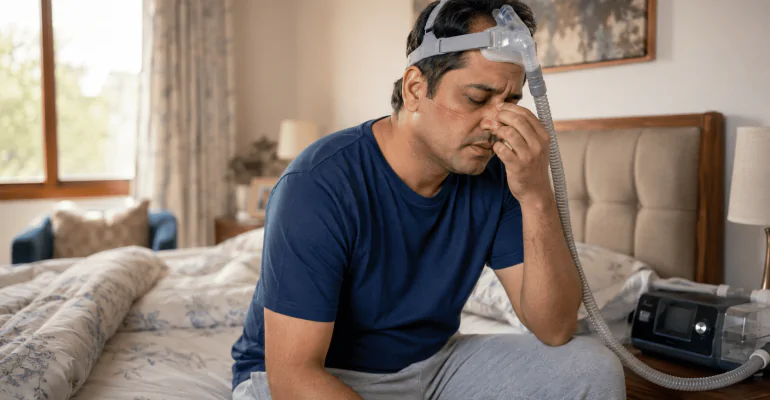
Waking up with CPAP mask marks, redness around your nose, or soreness on the bridge of your nose can be aggravating. Many CPAP users find that the machine helps them breathe better at night, but the mask itself feels uncomfortable.
The good news is that most CPAP skin problems can be fixed. Most of the time, it is not the therapy. It is the fit of the mask, the strap tension, the condition of the cushion, the cleaning routine, or the style of mask.
Here is a simple guide to understanding why CPAP marks, rashes, and nose bridge pain happen, and what you can do about them.
Why Does a CPAP Mask Leave Marks on the Face?
Light CPAP mask marks on face are common, especially if you sleep 6–8 hours with the mask on. However, deep red lines, painful pressure marks, or marks that last for many hours usually mean something needs to be adjusted.
The most common causes are:
- Tight mask straps
- Wrong mask size
- The cushion is old, hard, or broken
- You tighten the mask more because of air leakage and skin irritation
- You lie on your side and the pillow pushes the mask into your face
- Oil, sweat, or moisture on the face is affecting the seal
A common mistake is that users tend to tighten the mask more if it leaks. But a CPAP mask should be snug, not painfully tight. Over-tightening can increase pressure on the cheeks, nose bridge, and forehead.
What Causes CPAP Nose Bridge Pain?
Pressure from masks that cover the nose usually causes CPAP nose bridge pain. This is common with some nasal masks and full-face masks, especially when the frame or cushion of the mask presses directly on the upper nose area.
You might see:
- Redness on the nose bridge
- Pain after taking off the mask
- Peeling or dryness of skin
- A sore spot that grows worse each night
- Open cuts or pressure sores in severe cases
If the pain is mild, minor adjustments can help. However, if you notice broken skin, bleeding, swelling, or a wound, do not ignore it. Talk to your doctor or CPAP provider.
What Causes a CPAP Mask Rash?
A CPAP mask rash can occur from friction, sweat, trapped moisture, unclean mask parts, or skin sensitivity. Some users may also be sensitive to mask materials, cleaning products, or residue from harsh soaps.
Common signs of a CPAP mask rash are:
- Pruritus, or itching
- Red dots
- Burning feeling
- Tiny bumps
- Flaky or dry skin
- Redness or irritation around the nose, cheeks, or mouth
Heat and humidity in India can compound this problem. Sweat inside the mask can increase friction and decrease the seal quality, causing the mask to move around more during sleep.
CPAP Skin Marks and Rashes: Practical Solutions
Loosen the Straps a Little
Start with the easiest fix. While the CPAP machine is running, wear the mask and gently adjust the straps. The goal is to prevent large leaks without creating pressure points.
Proper fitting, not maximum tightness, will achieve a good mask seal. If you regularly wake up with red marks on the nose, this CPAP nose bridge red mark guidance may help you understand why strap pressure matters.
Wash Your Face Before You Put on the Mask
Wash your face at night to get rid of oil, sweat, sunscreen, or moisturizer. A clean face helps the cushion seal better and prevents skin irritation.
Do not use a thick cream before applying the mask, as this can make the cushion slip and may damage some mask materials.
Regularly Clean the Mask Cushion
Oil, dust, and bacteria can build up on a dirty cushion. This may irritate the skin and decrease the seal of the mask. Clean the cushion with mild soap and water or CPAP-safe cleaning wipes and filters, as per the manufacturer’s instructions.
Do not use harsh detergents, alcohol-based cleaners, or scented soaps, as these can leave irritating residues.
See If the Cushion Needs Replacing
If your mask used to be comfortable but now leaves marks or leaks, the cushion might be worn out. Old cushions tend to stiffen, yellow, crack, or come off. As the cushion becomes firmer, it is common for people to tighten the straps more, which can leave pressure marks.
Changing the cushion can often help with both leaks and skin discomfort.
Use a Mask Liner or Soft Pad
Mask liners provide a soft barrier between your skin and the mask cushion. They can reduce friction, absorb perspiration, and prevent direct pressure on sensitive areas.
A nasal bridge pad can help relieve nasal bridge pain from CPAP by reducing pressure. But make sure the pad does not cause air leakage.
Check the Mask Size Again
If the mask is too small, it may dig into the cheeks and nose. If the mask is too large, it might leak, move around, and force you to tighten it. Both can irritate the skin.
If you are constantly fiddling with your mask at night, then the size or style may not be right for you. Since CPAP masks come in different styles and sizes, it is worth reassessing your current mask instead of forcing yourself to adjust to discomfort.
Change the Mask Type
If you repeatedly get pain on the nose bridge, you may benefit from a mask that does not touch that area. For example, nasal pillow masks and under-the-nose masks are less likely to contact the nose bridge.
Modern full-face masks may sit under the nose instead of covering the full nose bridge area. However, mouth breathers may still need a full-face mask.
Use the Correct Pillow Position
Side sleepers are more prone to CPAP mask marks on their faces because the pillow pushes the mask into the skin. Try moving your face closer to the edge of the pillow so that the mask has more room.
A CPAP-friendly pillow can also reduce mask movement.
What Not to Do
Do not ignore broken skin or increasing pain. Avoid harsh home remedies on irritated areas. Do not change CPAP pressure settings yourself just because the mask feels uncomfortable. Adjusting pressure settings needs professional guidance.
Also, do not continue to use a broken mask cushion just to “get by for a few more days.” A less-than-ideal seal can make therapy less comfortable.
When Should You Request Assistance?
Talk to a CPAP expert or doctor if:
- The rash keeps coming back
- You have open sores or pressure sores
- Nose bridge pain is worsening
- Your mask leaks every night
- You feel like you have to over-tighten the straps
- You are not using CPAP because of discomfort
Regular skin checks are important when using any mask-based breathing therapy, especially if redness, tenderness, or skin changes are getting worse. This skin care guidance for mask pressure explains why clean, dry masks and regular inspection matter.
CPAP therapy should not be a nightly battle. The right mask, the right fit, a clean cushion, and small comfort accessories can make a world of difference.
Thoughts to Wrap Up
CPAP mask rash, pain on the bridge of your nose, and marks on your face are common, but they are not something you have to put up with. Most problems can be fixed by fine-tuning the fit, improving cleaning habits, replacing worn parts, or changing to a different mask style.
If your current mask is leaving painful marks every morning, it might be time to reconsider the fit. The key to comfortable CPAP therapy is finding the right mask, one that fits well but does not hurt your skin.
For long-term comfort, you can also review a complete CPAP accessories checklist to understand which small add-ons may improve your nightly therapy experience.