



CPAP Aerophagia (Swallowing Air): Why It Happens + Practical Fixes
April 7, 2026 2026-04-24 11:36CPAP Aerophagia (Swallowing Air): Why It Happens + Practical Fixes
CPAP Aerophagia (Swallowing Air): Why It Happens + Practical Fixes
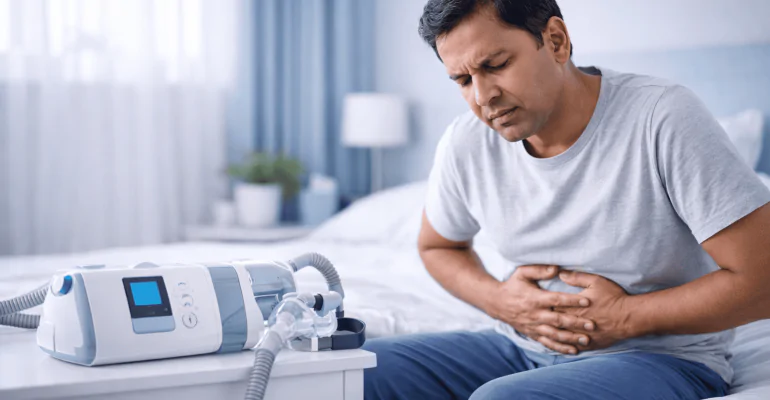
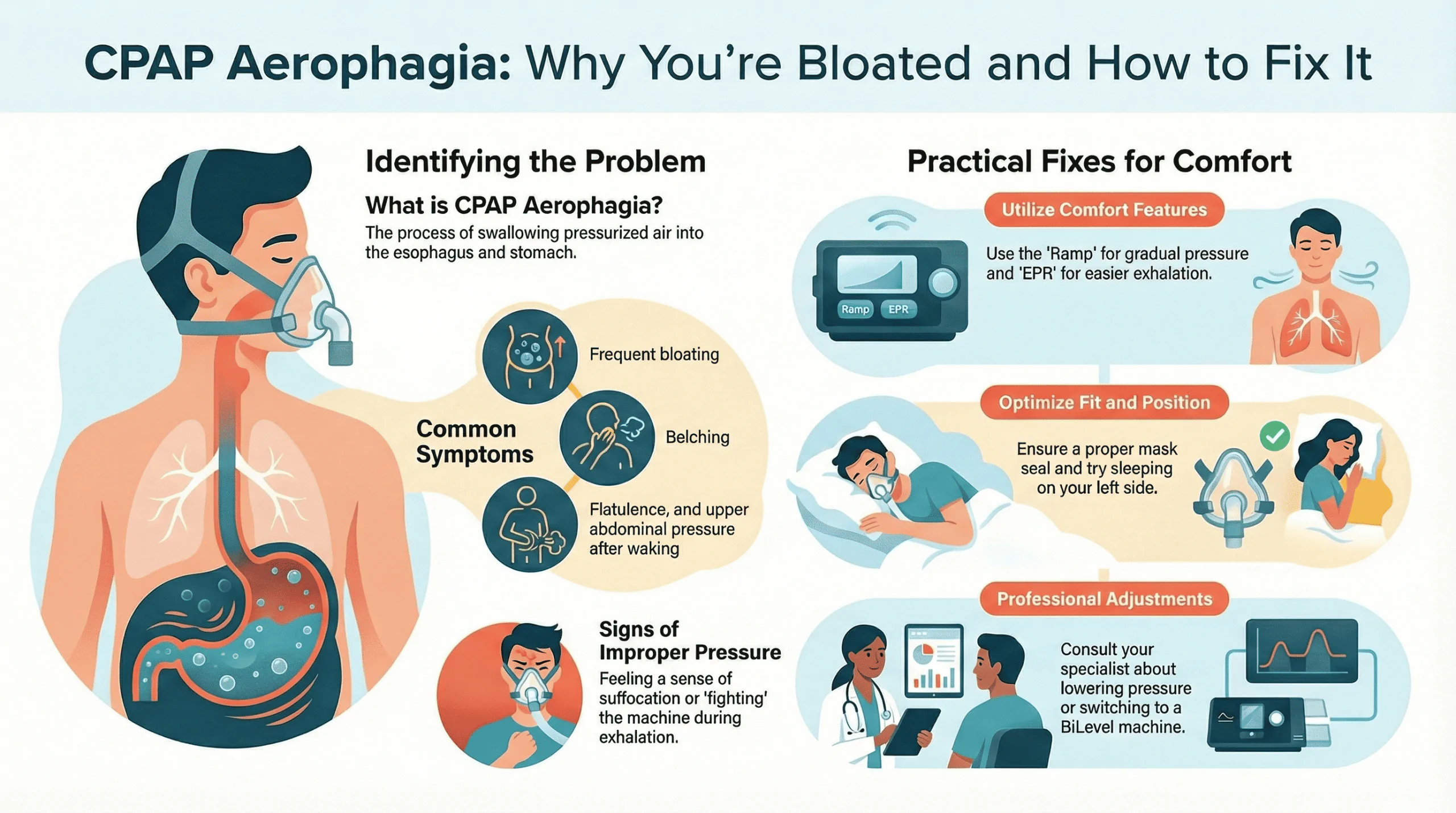
If you feel gassy, burpy, or uncomfortably full after using your CPAP, you may be dealing with aerophagia CPAP users sometimes experience. In simple terms, aerophagia means swallowing air. With CPAP therapy, that extra air can end up in the stomach instead of staying where it should—supporting your airway. Common signs include bloating from CPAP, belching, flatulence, and pressure in the upper abdomen.
The good news is that this problem is common, and in many cases it can be improved without giving up therapy.
What causes CPAP aerophagia?
CPAP works by delivering pressurized air to keep your airway open during sleep. Sometimes, part of that air gets pushed into the esophagus and stomach. This is more likely when pressure feels too strong, when exhaling feels difficult, or when there are mask-fit and mouth-breathing issues that make therapy less comfortable. People who wake up with stomach fullness, repeated burping, or gas often describe it as one of the most frustrating side effects of treatment.
In some cases, CPAP pressure too high symptoms can overlap with aerophagia. These may include trouble exhaling, dry mouth, discomfort with the airflow, a feeling of suffocation, and bloating or belching from swallowed air.
Signs your CPAP setup may need adjustment
Aerophagia is not always caused by one single issue. It is often a combination of settings, mask choice, and sleeping habits. You may need to review your setup if you notice:
- stomach bloating in the morning
- burping or excessive gas after using CPAP
- discomfort while exhaling
- waking up due to pressure or air leaks
- removing the mask in the middle of the night
If these symptoms keep happening, your machine settings or mask style may need fine-tuning rather than a full therapy change.
Practical fixes for bloating from CPAP
1) Check whether the pressure feels too aggressive
One of the first things to review is pressure comfort. If the airflow feels forceful from the beginning of the night, it may be worth discussing settings with your sleep specialist. Do not change prescribed pressure on your own, but do report the symptoms clearly. Persistent bloating from CPAP can sometimes improve when pressure is re-evaluated.
2) Use the ramp feature
The ramp feature CPAP machines offer can help you fall asleep more comfortably by starting at a lower pressure and gradually increasing to the prescribed level. For people who struggle at the start of the night, this softer beginning may reduce the urge to swallow air.
3) Turn on pressure relief during exhalation
One of the most useful comfort tools is exhalation relief. On some machines, this is called EPR. ResMed’s clinical guidance explains that EPR lowers the delivered pressure during exhalation, which can make breathing out feel easier. That is why EPR benefits may include better comfort for users who feel they are “fighting” the machine. For some people, easier exhalation may also help reduce aerophagia-related discomfort.
4) Review your mask fit
A leaking or poorly fitting mask can make therapy feel awkward and less natural. Some users compensate by changing how they breathe, swallowing more air, or tightening the mask too much. A properly fitted mask can improve comfort and reduce side effects. If you use a nasal mask and often breathe through your mouth, a chin strap or a different mask style may help.
5) Adjust sleep position
Side sleeping may feel more comfortable for some CPAP users with aerophagia than lying flat on the back. Some guidance also suggests that sleeping on the left side may help reduce gas and stomach discomfort.
6) Manage nasal congestion
When your nose is blocked, you may breathe awkwardly or through your mouth, which can worsen overall CPAP comfort. Heated humidification, saline spray, or mask review may help if congestion is part of the problem.
When to speak to your doctor
If aerophagia keeps happening despite trying comfort features, mask changes, and better sleep positioning, speak with your clinician. In some situations, a different PAP mode such as bilevel may be considered for people who do not tolerate constant pressure well. Aerophagia should not be ignored if it is making you use CPAP less often, because consistent therapy is important for keeping sleep apnea under control.
Final thoughts
Aerophagia CPAP users experience can be uncomfortable, but it is usually manageable. If you are dealing with bloating from CPAP, start by reviewing comfort settings, pressure tolerance, mask fit, and sleep position. Features such as the ramp feature CPAP devices include, along with exhalation relief and the known EPR benefits, may make therapy much easier to tolerate. And if you notice several CPAP pressure too high symptoms, it is worth asking your provider to review your setup.