



Acupuncture for Sleep and Anxiety: Calming the Vagus Nerve for Better Nights
February 13, 2026 2026-02-13 16:32Acupuncture for Sleep and Anxiety: Calming the Vagus Nerve for Better Nights
Acupuncture for Sleep and Anxiety: Calming the Vagus Nerve for Better Nights
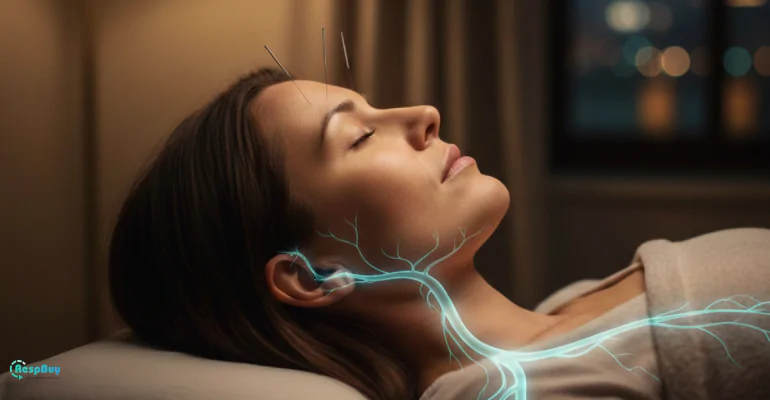
Acupuncture for sleep and anxiety may help by nudging the nervous system from fight or flight into rest and digest. That shift can reduce the body’s night time alarm signals, making it easier to fall asleep and stay asleep. Research suggests acupuncture can affect autonomic balance, including vagal activity, which is linked with calmer breathing and steadier heart rate patterns. Reviews also discuss changes in stress pathways like the HPA axis and cortisol, plus sleep related messengers such as serotonin and GABA. It is not a sleeping pill, so results tend to build over several sessions. People often report fewer racing thoughts, fewer sudden wake ups, and a calmer evening wind down. Best results come with routine and small tweaks.
If your mind refuses to slow down at night, you are not alone.
And if anxiety follows you to bed, you are definitely not alone.
Many people in India are now exploring acupuncture for sleep and anxiety, not as a trend, but because conventional options do not always feel complete.
The vagus nerve hook: why you feel “wired” at bedtime
Anxiety is not only in the head. It changes your breathing, heart rate, muscle tone, and how easily you startle. That is the nervous system leaning toward fight or flight.
Sleep needs the opposite setting. The vagus nerve is one of the main pathways that helps your body downshift into rest and digest.
A mechanistic study on autonomic regulation reports that acupuncture can enhance vagal activity and shift balance toward vagal dominance for a short period after treatment.
Plain meaning: if the body downshifts, the mind often follows.
Where sleep apnea fits in
If you have obstructive sleep apnea, your sleep is already broken into pieces. Add anxiety, and the next day feels heavier.
In a study of newly diagnosed, untreated OSA patients, anxiety symptoms were reported in about 43.8% of patients.
Acupuncture cannot replace apnea treatment, but calming the stress layer can support better sleep routines.
Sleep Better at Home
Tips Inspired by Dr. Chunxin Chang’s Clinical Approach
Practical strategies you can use to improve your sleep quality
Dr. Chang combines biomedical foundation with a Doctorate in Acupuncture and Herbal Medicine, plus advanced training in trigger point therapy and myofascial release. His approach emphasizes patient education and rehabilitation-focused care.
Use this mindset at home:
Treat it like a short course, not a one-off
Nervous system change needs repetition. Plan a few weeks and track: sleep onset time, number of awakenings, and morning mood.
Why it works: Consistent tracking helps you see patterns and progress that you might otherwise miss. Your nervous system needs time to learn new patterns.
Stack slow breathing after sessions
Do 3 minutes of belly breathing with a longer exhale than inhale. It supports the same downshift direction.
How to do it: Breathe in for 4 counts, out for 6-8 counts. Place your hand on your belly to feel it rise and fall. This activates your parasympathetic nervous system.
Bring your body tension story
Many people cannot sleep because their neck, back, or jaw hurts. If pain is part of your insomnia, tell the practitioner. Reducing pain can remove a big sleep trigger.
Be specific: Note where you feel tension, when it’s worst (evening/morning), and what makes it better or worse. This helps target the root cause.
Fix one trigger you control
Pick one: stop caffeine after lunch (yes, even chai), eat dinner earlier, or reduce screen time in the last hour.
Small changes make it easier to see real improvement.
Start with one: Don’t try to change everything at once. Pick the easiest trigger first, master it for 2 weeks, then add another if needed.
Remember
Better sleep isn’t about perfection—it’s about consistency, patience, and addressing the real triggers that keep your body from relaxing. Small, sustained changes create lasting results.
What the science points to: stress hormones and calming chemicals
People ask, “How does acupuncture help you sleep?”
Think of the stress loop. When stress stays high, the HPA axis stays switched on. That can keep cortisol higher than it should be in the evening, and cortisol at night can keep sleep light.
A 2024 review describes pathways where acupuncture may support insomnia by influencing serotonin and lowering cortisol as part of the stress response.
A separate paper on sleep quality also notes proposed regulation of serotonin, melatonin, and GABA and balancing of the HPA axis.
What this can feel like:
- fewer sudden wake ups with a racing heart
- less tightness in jaw, neck, and chest
- easier return to sleep after waking
The “what to expect” guide (India-friendly)
A good practitioner starts with questions: your sleep timing, your worst anxiety window, digestion, pain, and medication history. Then needles are placed for about 20 to 40 minutes.
Most people feel a brief pinch and then dull pressure, warmth, or heaviness.
Commonly used areas for nighttime calm include Anmian (behind the ear), Yintang (between the eyebrows), and Shen Men on the ear. If you are needle shy, ask about ear seeds or auricular acupressure. Ear based stimulation is being studied in relation to HRV and vagal pathways.
Managing CPAP anxiety: where acupuncture can support sleep apnea therapy
Early CPAP weeks can feel strange. Some people get mask anxiety or a bedtime panic feeling. Acupuncture cannot keep the airway open, so it cannot replace CPAP. But it may help reduce the nervous system alarm around the mask, so you can wear it longer and sleep more steadily.
Safety notes: Acupuncture is generally safe when done by a trained practitioner using sterile needles. If you are pregnant or on blood thinners, ask first.
Conclusion
Acupuncture for sleep and anxiety is best thought of as nervous system training. Evidence suggests it can influence autonomic regulation and stress related pathways that affect sleep.
For many Indians, the win is not perfect sleep overnight. The win is fewer anxious spikes, less body tension, and a calmer path into sleep.
How many sessions are usually needed for sleep changes?
Many people try 6 to 10 sessions over several weeks. Chronic insomnia usually needs consistency.
Does acupuncture work for both anxiety and insomnia?
It may help both because they share stress pathways, but improvements are often gradual.
Can acupuncture replace CPAP for sleep apnea?
No. It does not treat airway obstruction. CPAP and medical evaluation remain primary treatments.
Is acupressure useful if I do not want needles?
It can be a starting point. Ear seeds and auricular acupressure are common options, and ear based methods are studied for autonomic effects.