



Dry Mouth on CPAP? Causes & Solutions (Humidifier, Mouth Leak, Mask Choice)
January 8, 2026 2026-01-09 9:46Dry Mouth on CPAP? Causes & Solutions (Humidifier, Mouth Leak, Mask Choice)
Dry Mouth on CPAP? Causes & Solutions (Humidifier, Mouth Leak, Mask Choice)
Quick Summary:
People who use CPAP often have dry mouths because they breathe through their mouths or because their masks leak, not because of “too much pressure.” To get relief right away, raise your heated humidifier one step, check the fit of your mask and the large-leak data, and if your mouth opens at night, add a chin strap CPAP or switch to a full face mask for dry mouth. If your nose is still dry after a week, or if you have nasal blockage, sores or large leaks that won’t go away, ask your sleep clinician to check the settings and mask type.
Introduction
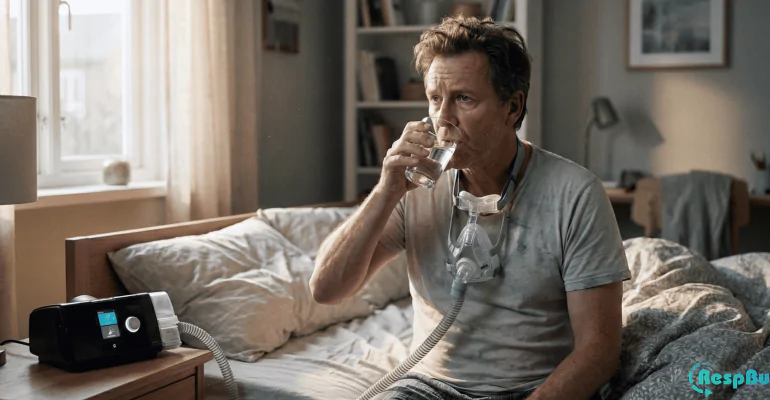
If you wake up with a “sandpaper” mouth, CPAP may feel harder than it should. The good news is that you can usually fix dry mouth on CPAP once you figure out what’s causing it. Most of the time, it’s a mouth leak, mouth breathing CPAP, or humidity that isn’t set correctly.
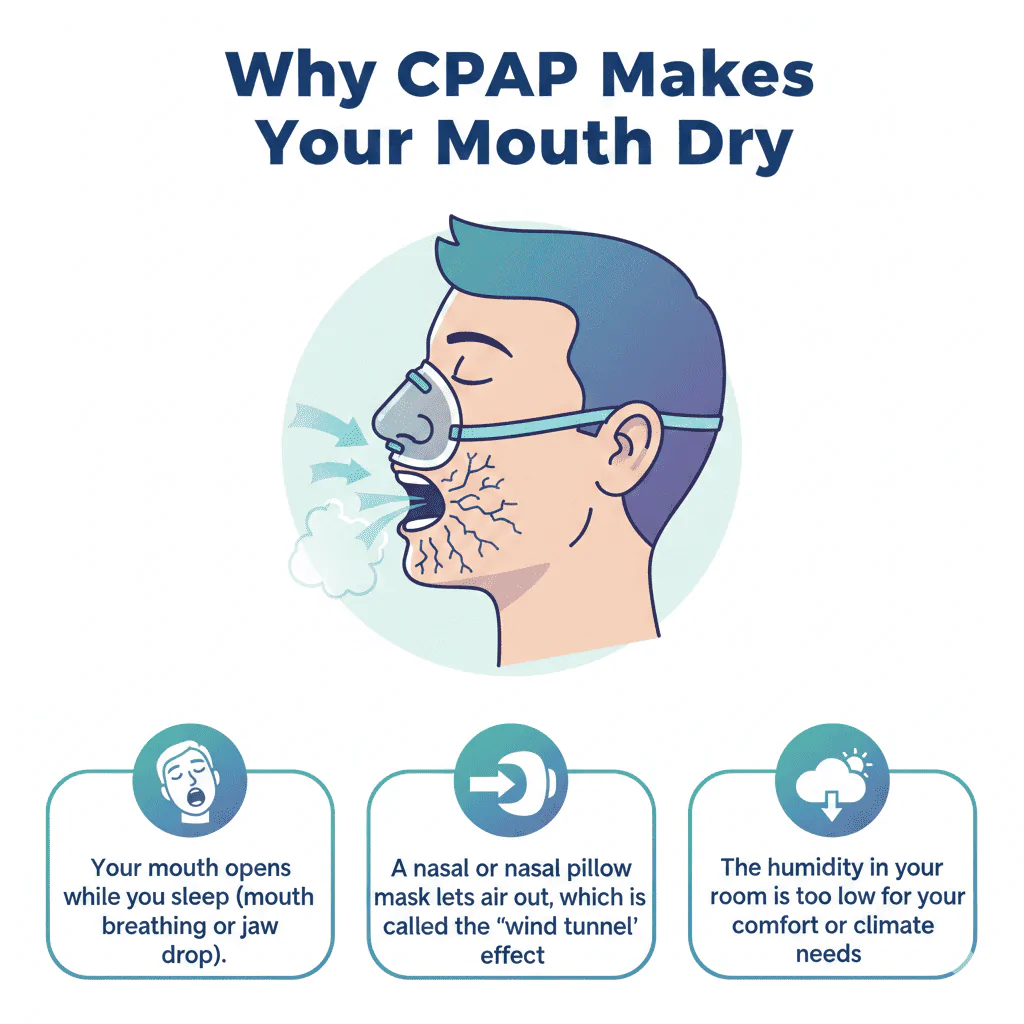
Why CPAP makes your mouth dry
When CPAP airflow goes through your mouth and throat, it can dry out the tissues there.
- Your mouth opens while you sleep (mouth breathing or jaw drop)
- A nasal or nasal pillow mask lets air out, which is called the “wind tunnel” effect.
- The humidity in your room is too low for your comfort or climate needs.
Self-check for 60 seconds (before you make any changes)
Ask in the morning:
- Is my mouth really dry, but my nose feels fine? → probably a leak in the mouth
- Do I see or hear “large leak” alerts? → fit of the mask/leak
- Is my nose stuffy at night? → you might start breathing through your mouth
- Do I wake up with cracked lips and a dry mouth? → think about the humidity and how you drink water
Fix #1: Set the CPAP humidifier settings so they don’t cause rainout.
Use the humidifier on your device if it has one. Humidification often makes the upper airway less dry.
How to change the settings on your cpap humidifier (easy way):
- Begin at a medium level and raise it by one step every two to three nights until your dry mouth gets better.
- If you get water in the tube or mask (rainout), lower the humidity one step or raise the temperature of the tube (if you have heated tubing).
- To stop condensation from drifting, keep the machine at or below the height of the mattress.
- If your model recommends it, use distilled water (it also helps keep minerals from building up).
Fix #2:Stop the mouth leak (the number one cause).
A leaky setup can dry out your mouth and make therapy less effective, even when it’s humid.
Use this order:
- While lying in your usual sleep position (side or back) and with pressure running (use “mask fit” mode if you have it), refit your mask.
- Look for worn-out cushions and stretched headgear, which are common causes of silent leaks.
- If you’re using nasal pillows, make sure the size isn’t too small (small sizes often leak when you move).
- If you have chronic nasal congestion, ask your doctor if a saline rinse or spray before bed can help.
Fix #3: Pick the right mask for how you breathe
Most people don’t realise how important it is to choose the right mask.
If you breathe through your mouth
A full face mask for dry mouth can help because it covers both your nose and mouth, so the therapy doesn’t “escape” when your jaw relaxes.
If you usually breathe through your nose, but your mouth sometimes falls open
If you use a nasal or nasal pillow mask, you might want to try a chin strap CPAP that gently holds your jaw closed.
Tip: Chin straps work best when your nose can breathe well. If not, you’ll still have trouble.
Fix #4: Comfort extras that really make a difference
- Heated tubing: for many users, it helps keep moisture flowing and cuts down on dryness.
- Room humidity: If you live in a very dry place or use AC or heating in the winter, a bedroom humidifier might help.
- Lip care: Putting a thin layer of water-based balm on your lips before bed can help keep them from cracking (but don’t put petroleum near silicone seals).
When to call your sleep doctor
If your dry mouth doesn’t go away after 1–2 weeks of changes, or if you have:
- sores in your mouth, waking up a lot, or a “large leak” that won’t go away
- suspected problems with pressure or a blocked nose that won’t go away
- signs of serious dehydration or dry mouth caused by medication
General FAQs
1) What makes CPAP make your mouth dry?
Most often, it’s breathing through your mouth, leaking from your mouth, or not enough humidity in your environment. If the mask doesn’t fit well, it can dry out the mouth and make the therapy less effective.
2) What are the best settings for a CPAP humidifier if you have a dry mouth?
Start at a middle setting and raise it one step every two to three nights until you feel comfortable. If you get water in the tube or mask (“rainout”), lower the humidity a little or raise the temperature of the tube if it is heated.
3) Will a chin strap help with a dry mouth while using CPAP?
Yes, a lot of the time, especially if you wear a nasal/nasal pillow mask and your jaw drops open. Chin straps are meant to keep your mouth from opening too wide or leaking, but they don’t work for everyone, so keep an eye on comfort and leaks.
4) Is a full face mask better for people with dry mouths?
A full face mask can help if you breathe through your mouth a lot or if your mouth opens at night. It covers both your nose and mouth. Fit is still important because big leaks can still make things dry.
5) How can I tell if I’m leaking air from my mouth while using CPAP?
Some signs are waking up with a very dry mouth, your app showing big leaks, or feeling or hearing air coming out of your lips. If you see any of these signs, pay attention to the fit of the mask, the humidity, and the jaw support (chin strap) or change the type of mask.