
Popular posts

Where to Buy a CPAP Machine in India
September 11, 2026



5 Reasons Your Under-Eyes Always Look Tired
May 06, 2026CPAP vs BiPAP: Understanding the Key Differences and Choosing the Right Therapy
December 7, 2020 2026-05-21 14:01CPAP vs BiPAP: Understanding the Key Differences and Choosing the Right Therapy
CPAP vs BiPAP: Understanding the Key Differences and Choosing the Right Therapy
Sleep-related breathing disorders are becoming increasingly common, and many people are now being advised to use PAP therapy for better sleep and improved breathing. When researching treatment options, one of the most common questions patients ask is: CPAP vs BiPAP — what’s the difference?
While both machines are designed to support breathing during sleep, they work differently and are recommended for different conditions. Understanding these differences can help patients feel more confident about their therapy journey and discuss the right option with their doctor.
What Is PAP Therapy?
PAP stands for Positive Airway Pressure. Both CPAP and BiPAP fall under this umbrella. The basic idea is the same — the machine pushes pressurized air through a mask while you sleep, keeping your airway open so you don’t stop breathing. The difference is in how they deliver that air.
- Obstructive Sleep Apnea (OSA)
- Central Sleep Apnea (CSA)
- COPD
- Other breathing-related sleep disorders
The two most common types of PAP therapy are CPAP and BiPAP.
CPAP
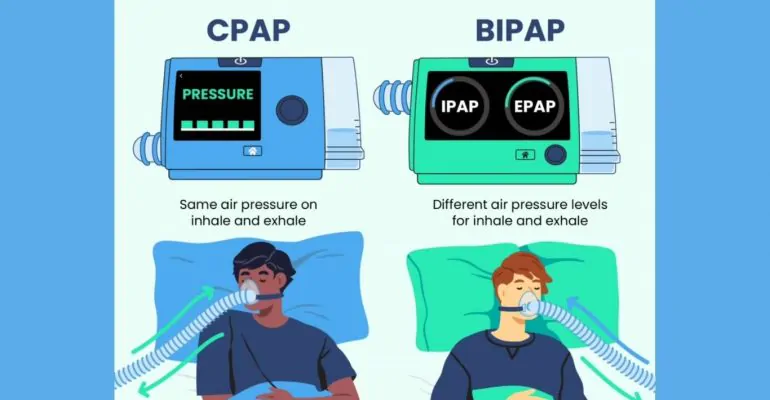
Delivers one steady pressure level all night — same pressure when you breathe in and when you breathe out.
BiPAP
Uses two pressure levels — higher when you inhale, lower when you exhale. Feels more like natural breathing.
What is a CPAP machine?
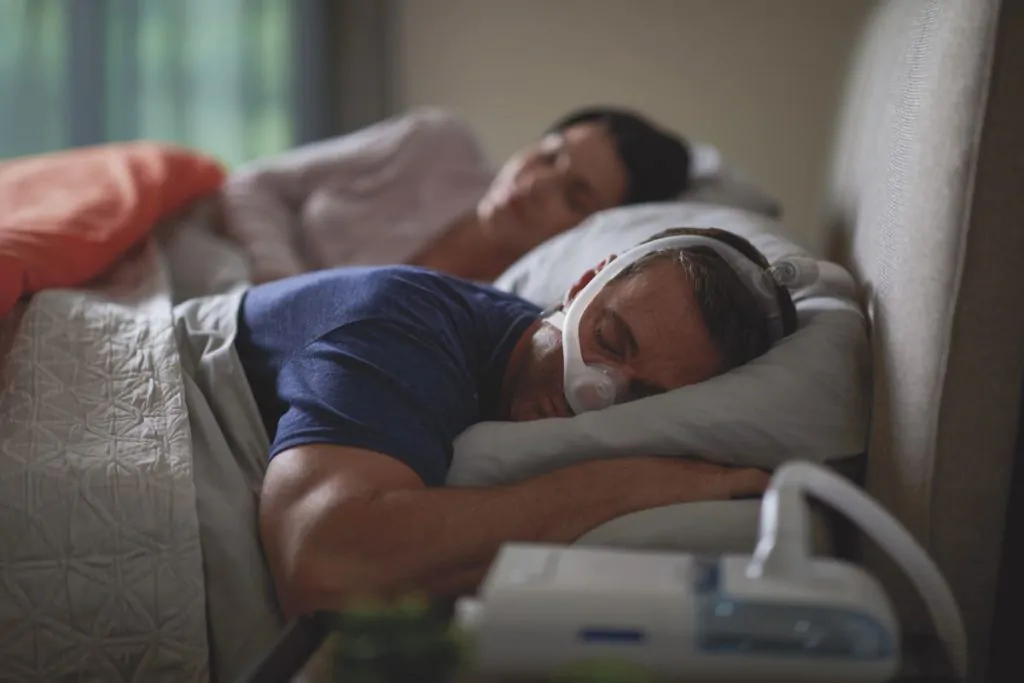
CPAP stands for Continuous Positive Airway Pressure. It pushes one constant stream of air through your mask all night long. When you breathe in, the pressure is there. When you breathe out, the pressure is still there — same level, no change.
This is the machine most people with sleep apnea are prescribed first. It works well for mild to moderate obstructive sleep apnea, it’s straightforward to use, and most people adapt to it without much trouble. It’s also cheaper than BiPAP, which is worth knowing if cost is a factor.
What is a BiPAP machine?
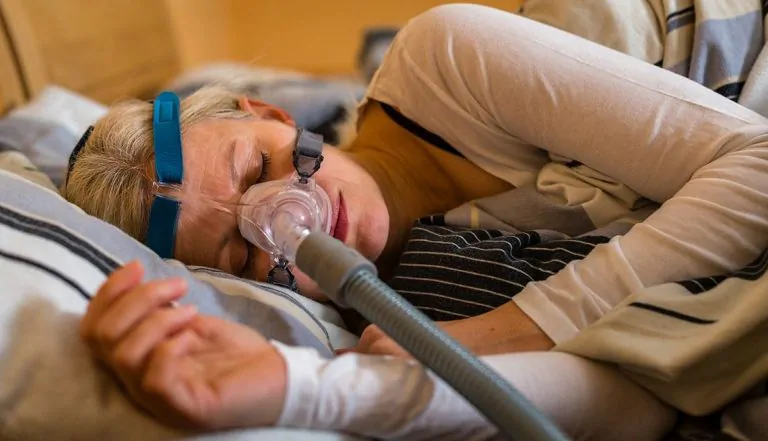
BiPAP stands for Bilevel Positive Airway Pressure. The “bilevel” part is the key — it switches between a higher pressure for inhaling and a lower pressure for exhaling. That drop in pressure on the exhale makes breathing feel less forced and more natural for a lot of people.
BiPAP is usually recommended when CPAP isn’t working well enough, or when someone has a more complex respiratory condition that needs extra support during both phases of breathing.
CPAP vs BiPAP: Key Differences
The main difference between CPAP and BiPAP is how air pressure is delivered.
| Feature | CPAP | BiPAP |
|---|---|---|
| Pressure Type | Single continuous pressure | Two pressure levels |
| Breathing Support | Basic airway support | More advanced breathing assistance |
| Comfort During Exhalation | May feel difficult for some users | Easier exhalation |
| Common Use | Mild to moderate OSA | Severe OSA or respiratory conditions |
| Cost | Usually more affordable | Typically more expensive |
| Complexity | Simpler setup | More advanced settings |
BiPAP and CPAP often serve different needs:
BiPAP machines are often known to provide better treatment to people with muscle and nerve problems than a CPAP machine. On the other hand, BiPAP machines assure that the user is breathing a set properly several times every minute. The difference in the pressures of inhalation and exhalation reduces the breathing work. Thus, a person can get proper sleep.
Sometimes, when CPAP fails to treat sleep disorder breathing, BiPAP machines are used to give treatment. CPAP devices are utilized in the treatment of mild to moderate sleep apnea. Based on the severity, doctors may suggest a BiPAP gadget instead. In a nutshell, both of the devices are used to treat people suffering from sleep-disordered breathing. To maintain a proper breathing cycle during sleep, correct therapy is crucial.
How do CPAP and BiPAP work?
When you inhale, a muscle in the chest known as the diaphragm helps in breathing by moving downwards. It causes a pressure drop in the lung sacs and tubes and draws air inside them. For problems like sleep apnea, while sleeping, drawing the needful amount of air becomes difficult.
In cases like this, doctors recommend using a BiPAP as it pressurizes air into the lungs and reduces the risk of getting a heart attack. CPAP also pressurizes air and delivers through a mask or hose during sleep. The steady airflow stabilizes the quality of respiration and sleep by keeping the airway open.
Which is better?
Both BiPAP and CPAP devices are used to reduce a person’s sleep apnea symptoms and make them stay comfortable during sleep. But some sleepers prioritize BiPAP machines over CPAP machines because it offers air pressure variation. CPAP machines maintain consistency in creating air pressure levels inside the mask.
This constant pressure is powerful enough to improve breathing by opening the airways. But these machines have one single pressure level, and because of this lack of variation, sleepers need to exhale against the extra pressure. BiPAP machines offer IPAP during inhalation, which is helpful for the person having sleep apnea, and EPAP during exhalation. The different pressure settings allow having a sound sleep.
Who would find BiPAP beneficial?
Many people across the world suffer from sleep apnea and require high-pressure settings. These are the people who suffer from having low oxygen levels and need BiPAP machines for additional support. When CPAP devices fail to provide adequate treatment to the patients suffering from sleep-disordered breathing, BiPAP machines come to use.
Cardiopulmonary disorders like congestive heart failure have increased over the years. BiPAP serves these patients. It is used to treat other diseases like asthma flare-up, COPD, obesity hypoventilation syndrome, coronary artery disease, neurological disorder, etc.
Why is BiPAP preferred over CPAP with C-Flex?
BiPAP therapy is somehow similar to C-Flex in terms of performance. The patients get the optimum pressure relief, and they do not feel like battling with the incoming airflow during exhalation. For the CPAP machines, C-Flex is all about comfort but can only relieve 3 cm of pressure.
BiPAP therapy is somehow similar to C-Flex in terms of performance. The patients get the optimum pressure relief, and they do not feel like battling with the incoming airflow during exhalation. For the CPAP machines, C-Flex is all about comfort but can only relieve 3 cm of pressure.
On the other hand, BiPAP starts at 4cm in terms of pressure relief and can go higher. The patients who require lesser pressure relief can choose CPAP devices with C-Flex. Another notable difference between CPAP with C-Flex and BiPAP is that C-Flex does not offer a fixed amount of pressure relief, where the pressure drop depends on various breathing levels.
Related Sleep Care Solutions
Explore Home CPAP Solutions
Sleep comfortably with CPAP machine which can be used at home.
Find Your Perfect CPAP Mask
Explore comfortable nasal and full-face masks designed for better therapy.
Essential CPAP Accessories
Upgrade your therapy with humidifiers, tubing, filters, and replacement parts
Conclusion:
It is crucial to follow the doctors’ or experts’ instructions on the process and when to use the BiPAP. If you find improvement in breathing and health problems, you might be able to reduce your machine’s pressure or use it seldom. Based on your health conditions, your expert will advise you when you need to lessen the usage.