
Popular posts
PC Based Spirometer Comparison: Clarity SpiroTech vs RMS Helios 401
October 15, 2026
Oxymed CPAP Machine Comparison: SleepEasy, SleepEasy 2.0 & AirSmart
October 14, 2026
Where to Buy a CPAP Machine in India
September 11, 2026

First 30 Days on CPAP: Common Problems New Users Face and How to Adjust
June 18, 2026 2026-06-18 11:08First 30 Days on CPAP: Common Problems New Users Face and How to Adjust
First 30 Days on CPAP: Common Problems New Users Face and How to Adjust
Beginning CPAP treatment can be intimidating at first. You may know the machine is vital for sleep apnea management, but wearing a mask, sleeping with the airflow, and adapting to a new bedtime routine can take time.
The good news is that most first-month CPAP difficulties are normal and controllable. The first 30 days are not about perfection. It’s about getting used to your equipment, feeling comfortable, and using CPAP cautiously until it’s a regular part of your sleep pattern.
This CPAP starter guide discusses the most frequent problems new users experience and practical CPAP adjustment techniques to help you get more comfortable with therapy.
The Mask Is Uncomfortable
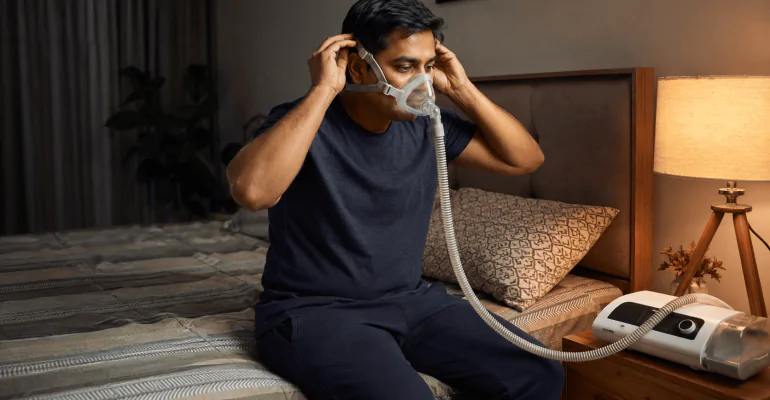
The mask is the hardest part for many beginners. It may feel odd, thick, or tight on your face. Some people sometimes wake up with marks, redness, or pressure around the nose area.
Tightening the mask is not always the answer. In fact, too much tightness may cause even more discomfort and even more leaking. “The mask should fit snugly but comfortably. Lie down in your normal sleeping position wearing the mask, because the fit can vary when you are in bed.
If it’s still not comfortable, you may need to try a new mask style. Different breathing habits and face types require nasal masks, nasal pillow masks, and full-face masks.
Air Mask Leakage
A certain amount of air leakage is acceptable, but excessive leaking around the eyes, cheeks, or mouth can interrupt sleep and impair comfort. Poor mask fit, incorrect mask size, facial hair, worn-out cushions, or sleeping position are common causes of mask leakage.
Clean the mask cushion often, as grease and sweat might impact the seal. Also inspect whether the cushion is soft, loose, or damaged. If you only leak when you turn to one side, a CPAP-friendly pillow or a modest change in sleeping position might assist.
Dry mouth or dry nose;
Dryness is one of the most typical CPAP complaints in the first month. Some people wake up with a dry throat, blocked nose, or irritation within the nose. This can be caused by mouth breathing, mask leaks, dry room air, or poor humidification.
A heated humidifier can help make therapy more comfortable, especially in air-conditioned environments or in dry weather. If you use a nasal mask and your mouth opens when you sleep, you may need a chin strap or a full face mask. Saline nasal spray could also help with nasal dryness, but discuss persistent irritation with your doctor.
Sleeping Trouble With CPAP
Many new users comment, “I can’t sleep with the machine running.” This is natural at the beginning when your body is adjusting to a new feeling.
One CPAP tip adjustment that can help is to wear the mask for short periods before bedtime. It can be used when you are reading, watching TV, or relaxing. This allows your mind to not think of the mask as anything strange.
If your CPAP machine has a ramp feature, you can use it as well. The ramp starts the airflow at a lower pressure and slowly raises it, making it easier to fall asleep.
Claustrophobic Feelings
When wearing a CPAP mask for the first time, many people feel nervous. This doesn’t mean CPAP isn’t for you. It only means you have to change more slowly.
First, hold the mask near your face without fastening the straps. Then leave it for a few minutes without turning on the machine. Then connect to the air and practice breathing quietly while you are awake. Slow exposure can make a significant difference.
If a full-face mask feels too heavy, you may want to ask your sleep specialist if a nasal or nasal pillow mask is right for you.
Air pressure is too strong
Some newcomers find the air pressure excessively strong, especially when they are exhaling. Do not alter your pressure settings on your own unless directed by your doctor or sleep technologist.
Instead, look for comfort options on your machine, including ramp or expiratory pressure relief. These aspects can be helpful for breathing. If the pressure remains bothersome, speak to your healthcare provider. Therapy data may need to be checked.
Waking Up at Night
In the first few weeks you may wake up due to leakage, dryness, pressure, noise, or simply because the mask is unfamiliar. With regular use it usually improves.
Do not attempt to remove the mask as soon as you wake up. Pause, fix the mask, breathe slowly, and attempt to go back to sleep. The key is consistency. Even a few hours of use at the start can help you get into the habit.
Marks of skin and irritation
You can have some mild irritation when you first start using CPAP, but you shouldn’t disregard uncomfortable redness, rashes, or sores. Wash your face before you sleep to get rid of the oil and sweat. Clean the mask cushion as directed. Avoid applying heavy lotions just before putting on the mask, as they may interfere with the seal.
If the mask is pressing too much on the bridge of the nose or cheeks, consider trying mask liners, strap coverings, or a different size mask.
Washing feels strange
CPAP novices sometimes wonder how often to clean their CPAP pieces. A simple routine helps. Empty and refill the humidifier chamber with clean water as indicated. Clean the mask cushion frequently and air dry. Clean the tubing, filters, and headgear according to the manufacturer’s instructions.
Good cleaning habits increase comfort, decrease smell, and make your equipment last longer.
Look for Immediate Results
A few nights can make some people feel better; for others it takes several weeks. You may notice gradual improvements in your quality of sleep, your energy level during the day, morning headaches, and snoring.
The first month is mostly about adjusting. Monitor your difficulties. Keep track of what gets better. If you are having trouble, discuss this with your doctor or CPAP provider. Never stop therapy without guidance.
Final Thoughts:
The first 30 days on CPAP might be tough, but most of the problems are easily solved. Better mask fit, adequate humidification, incremental practice, and regular cleaning can make therapy a lot simpler.
This beginner’s guide to CPAP is a good place to start, but remember everyone is different. With patience and the correct assistance, CPAP may be a comfortable part of your evening routine and over time can help you sleep better.